FROM THE CHESSBOARDS TO LIFE: THE GROWTH JOURNEY OF LITTLE CHESS LOVERS.
- bkgroup2term126
- 14 thg 12, 2025
- 3 phút đọc
Smiling in the face of defeat, remaining patient with every move on the board, young chess enthusiasts gradually cultivate their resilience, strategic thinking, and composure — qualities that accompany them as they step into the vibrant journey of growing up.

In recent years, chess has not only emerged as a popular extracurricular activity but has also been increasingly recognized as a comprehensive educational tool for children. Many parents choose this discipline not merely for its intellectual appeal, but for the profound developmental values it offers. On the neatly ordered board of 64 black-and-white squares, children learn to think logically, cultivate patience, confront failure, and devise strategies to overcome challenges. More than just a game, chess becomes a vivid lesson in growth—where every move carries responsibility, every mistake presents an opportunity to learn, and every victory is earned through perseverance. As a result, chess is steadily proving its important role in nurturing both the intellect and character of the younger generation.
Every Monday afternoon is a special time that Hung—a seven-year-old boy—eagerly looks forward to, as it is when he attends his chess class at Chess Family. In a quiet yet intensely focused setting, Hung and his classmates sit attentively around the chessboards, their eyes following each move as if stepping into a world of thought, strategy, and discovery. For Hung, chess is not merely about winning or losing. Each lesson is a journey that nurtures patience, logical thinking, and the ability to remain composed in every situation. Every piece placed on the board is unhurried, the result of careful deliberation and a lesson in taking responsibility for one’s own decisions.

From a student’s perspective, ten-year-old Khang recalled that his first exposure to chess came from watching his mother play with a friend every evening. “She taught me the basic moves, like how the knight moves and how to castle,” Khang said excitedly. After nearly a year of studying at the center, he believes he has changed significantly: “I’m more patient when solving difficult math problems, calmer when facing unexpected situations, and able to stay focused longer in class.” According to the center’s coaches, such progress is a clear result of chess training, where children continuously engage with challenges that require analysis and emotional control.
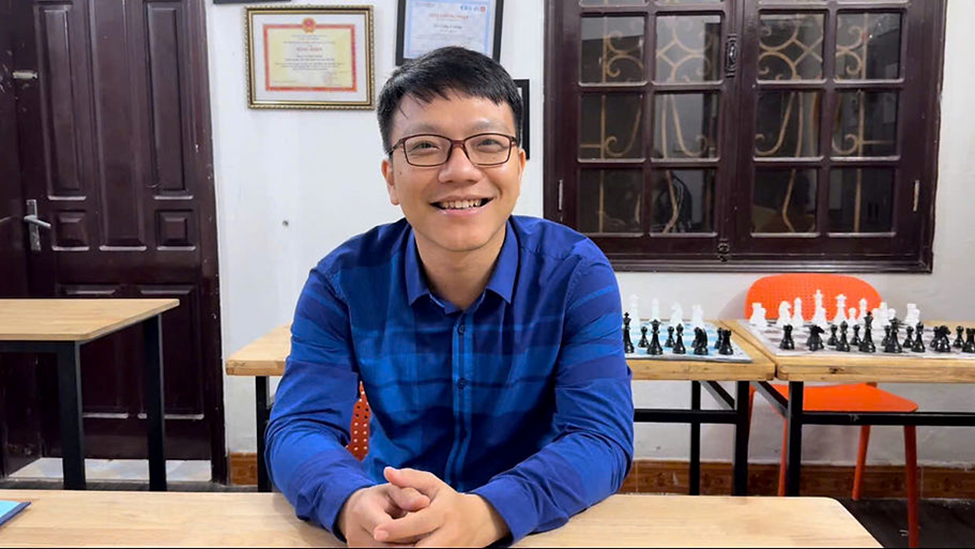
According to Mr. Cường, it is the unique blend of logical thinking, strategic depth, and the quiet elegance of the chessboard that has kept him devoted to the game to this day. Reflecting on the challenges of working with children of different ages, Mr. Lê Cường noted, “I constantly have to think and explore new, engaging ways to capture their interest—how to help them enjoy and love chess, and to see it as a game rather than a subject.”
From a parent’s perspective, Mrs. Huyen said the decision to enroll their child in chess training in a serious manner stemmed from a desire to help the child develop strong thinking skills and personal resilience from an early age. “At first, I thought chess was simply an intellectual sport that offered healthy entertainment. But the more I learned, the more I realized it provides an excellent environment for children to practice logical thinking, patience, and accountability for every decision they make,” she shared.
Chess is not only an intellectual game but also an educational tool that helps children develop patience, strategic thinking, self-control and a spirit of overcoming challenges. In modern education, chess is increasingly valued, for each game provides learning opportunities, helping children become confident, independent and understand that growing up is a voyage of constant self-improvement.

What do you think is the greatest value that chess brings to children who are passionate about it?
Developing logical thinking.
Improving concentration.
Enhancing emotional control and calmness.
Building perseverance and discipline.


Bình luận